溫故知新 Old wisdom, today’s insight — ONGO
승풍파랑 乘風破浪
To ride the wind and break through the waves; it describes advancing toward a grand ambition by overcoming great challenges.
승풍파랑 (乘風破浪) means "To ride the wind and break through the waves; it describes advancing toward a grand ambition by overcoming great challenges.". This idiom originates from the 'Biography of Zong Que' in the Book of Song. During the Southern and
1 Meaning
승풍파랑 (乘風破浪) means “To ride the wind and break through the waves; it describes advancing toward a grand ambition by overcoming great challenges.”.
Seung-pung-pa-rang (乘風破浪) literally means 'riding the wind and breaking the waves.' It symbolizes the strong will to pursue one's grandest ambitions while fearlessly overcoming any obstacles that stand in the way.
The Western Equivalent
No exact match — here's why
No direct English proverb. "Riding the wind, breaking the waves" means forging boldly ahead toward a great ambition despite obstacles. "Forge ahead against the odds" conveys the drive, but English lacks a fixed idiom with this seafaring image of pressing forward through storms.
2 Examples
A visionary entrepreneur decides to launch a tech startup during a major economic recession and market uncertainty.
They view the crisis as an opportunity, developing innovative solutions to unsolved problems and aggressively securing investment despite the climate.
A student experiences a major failure in a high-stakes exam and feels the urge to give up on their dreams entirely.
They analyze the cause of the failure, accept their shortcomings, and set an even higher goal while studying with more intensity than ever before.
An individual feels pressured to remain silent about a sensitive social issue for fear of public backlash.
Instead of yielding to fear, they bravely voice their convictions for the sake of truth and justice, ultimately persuading the public through integrity.
Which situation fits this idiom?
Pick the everyday scene where “승풍파랑” fits best.
3 Origin
4 Key Lessons
Great obstacles can serve as the very momentum needed to soar even higher.
True growth occurs when we face the rough seas rather than staying safely anchored in the harbor.
A clear sense of purpose is the most powerful weapon for overcoming adversity.
5 English Expression
English Vocabulary
ignite
불을 붙이다, 점화하다
"A single spark can ignite a whole forest."
charge
돌진하다, 공격하다
"The soldiers were ordered to charge the enemy line."
brave
용감한
"It was brave of her to speak up against the injustice."
swept away
휩쓸려 가다, 사라지다
"All his worries were swept away by the good news."
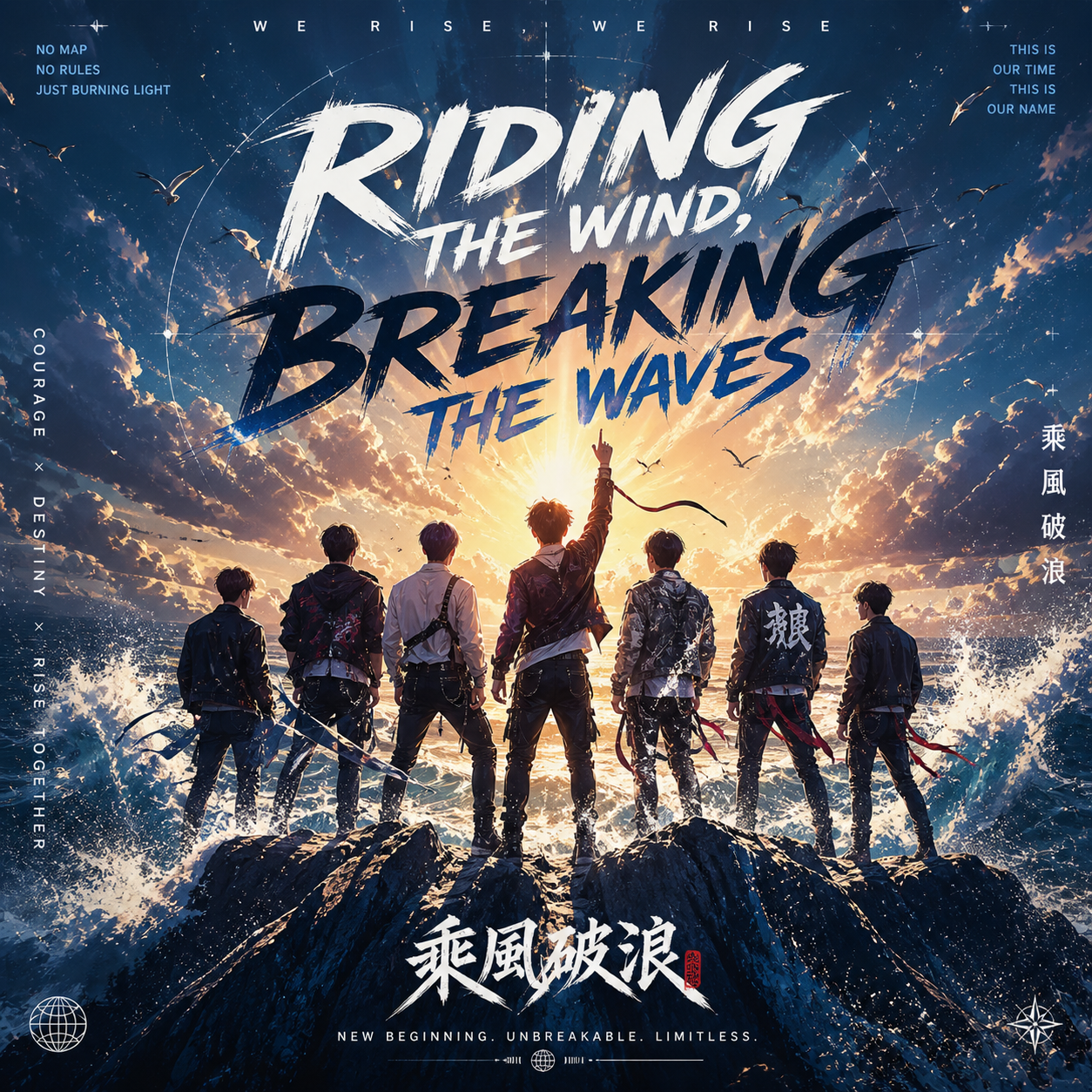
6 Learn with Music
Related Idioms



승풍파랑
Memorize idiom meanings and examples with various music genres
Listen to Track